
Chiari Malformation
What is Chiari Malformation?
Chiari malformation (CM) is a structural defect in the skull that results in part of the brain extending into the spinal canal. Specifically, this condition involves the cerebellum — the part of the brain that controls balance. In Chiari malformation, part of the cerebellum, known as the cerebellar tonsils, protrudes through the foramen magnum, the natural opening at the base of the skull, and into the upper spinal canal. This can cause various neurological symptoms due to the disruption of normal cerebrospinal fluid flow and compression of brain tissue.
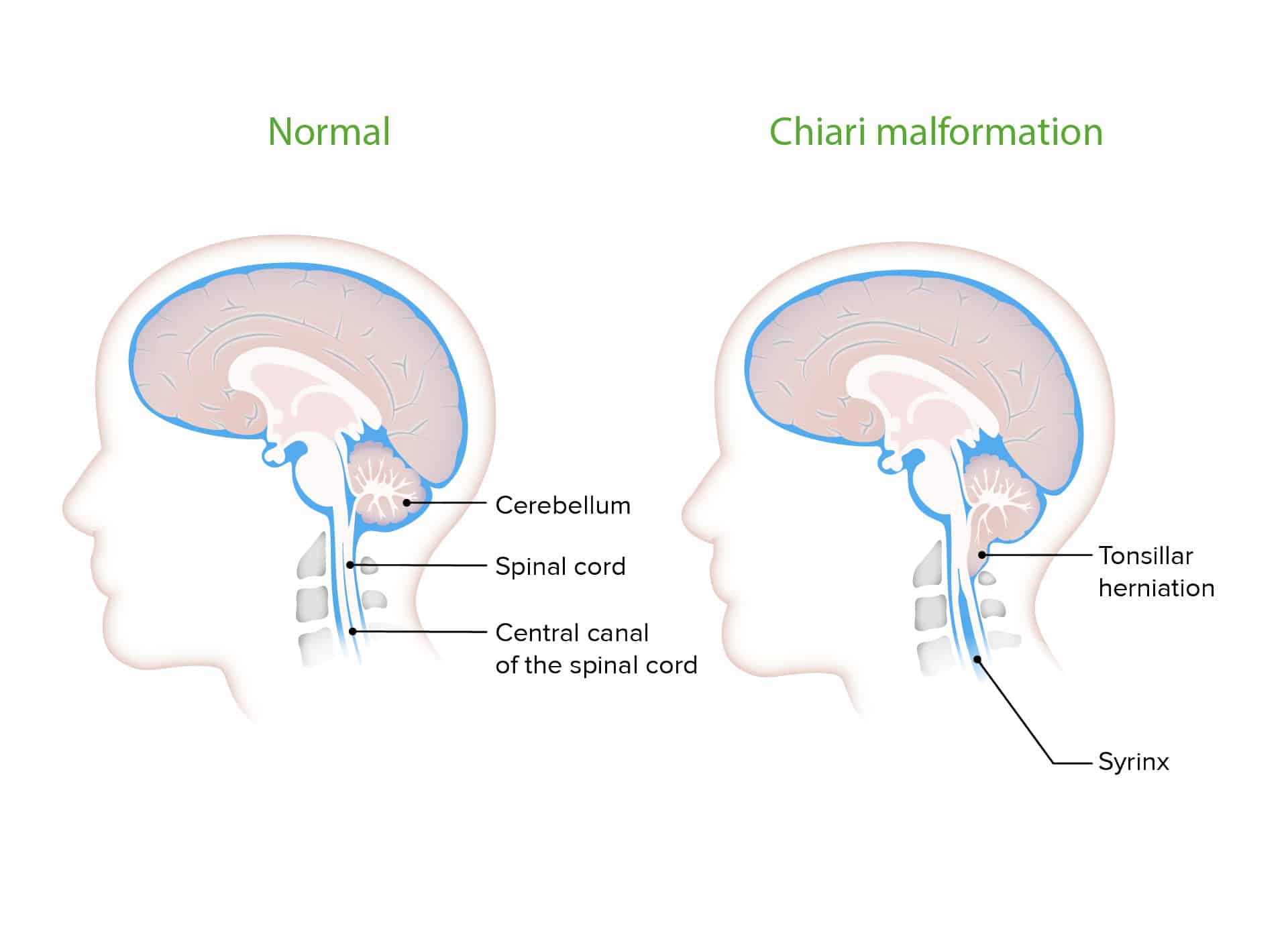
Causes of Chiari Malformation
Chiari malformation is a complex set of medical conditions that affect the brain and spinal cord where they join at the base of the skull. People who have Chiari malformation are either born with it or develop it later in life as a result of an injury or infection. It has two categories depending on its causes. These are:
Occurs during fetal development.
Occurs later due to traumatic injury, disease, or infection.

Known Treatments for Chiari Malformation
When patients experience symptoms like severe headaches, we prescribe medications to ease the pain. However, the best treatment for Chiari malformation is surgery. Surgery can improve or stabilize symptoms in most individuals or halt the progression of damage to the central nervous system.