Stenosis
Stenosis is a condition where one or more spaces in the spine are narrowed, causing irritation and/or compression of nerves. Nerves can become irritated by stretching, rubbing against bone, or being compressed by surrounding tissue.
This irritation can cause pain and/or numbness in the area of the nerve. It occurs anywhere along the spine, but the common areas affected are the neck and low back. Stenosis is common in people over 50 years old and in those who are born with a narrow spinal canal.
What are the Symptoms of Spinal Stenosis?
For neck stenosis, symptoms may include:
- Pain in the neck
- Shoulder pain
- Numbness or weakness in the arms or legs
- Loss function of hands
For low back stenosis, symptoms may include:
- Pain in the lower back
- Sciatica (pain that radiates from the lower back into the legs)
- Numbness or weakness in the legs
- Loss of bowel or bladder control (severe cases)
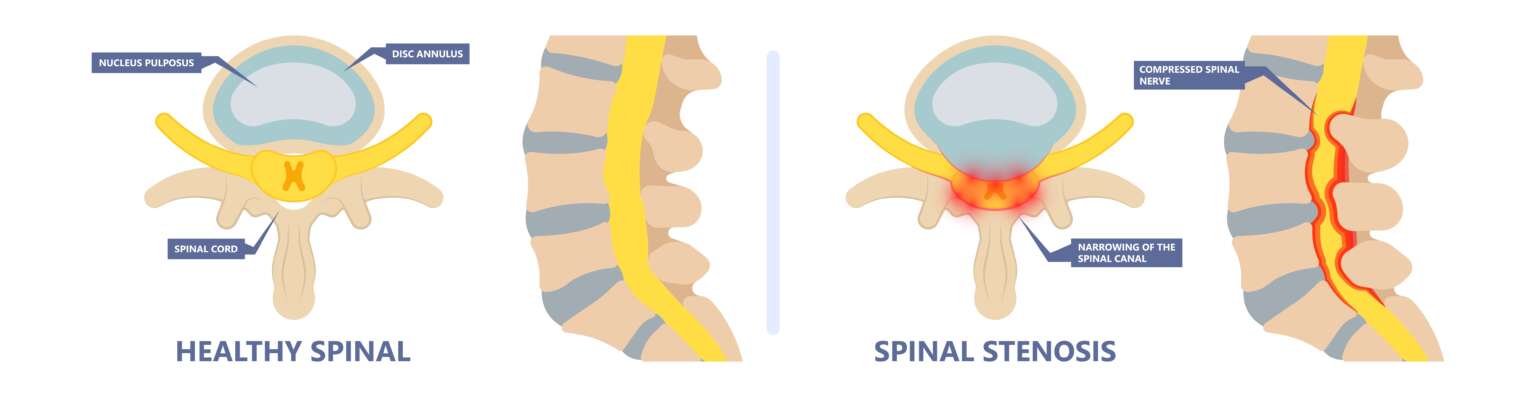
This is a degenerative condition that affects the joints and cartilage of the spine. It can result in narrowing of the spinal canal, which leads to stenosis.
These occur when part of the tough outer shell of an intervertebral disk ruptures and collapses into the spinal canal. Pressure on these nerves can result in pain and weakness in one or both legs or arms.
Causes of Spinal Stenosis
An injury to your spine may cause narrowing of your spinal canal, leading to stenosis. Other causes include:
- Tumors
- Thickened ligaments
- Congenital (present at birth) conditions
Treatment for Spinal Stenosis
For mild to moderate cases of spinal stenosis, your doctor may recommend:
- Over-the-counter pain relievers or anti-inflammatory medications
- Physical therapy
- Steroid injections